1
Moisture source identification
Mold returns unless the water source is fixed. We find the moisture, whether from leaks, condensation, or unresolved water damage, and document it.
Mold remediation is the controlled removal of mold growth and the correction of the moisture that caused it. Jacksonville Water Damage Solutions treats mold after water damage in homes and businesses using containment, HEPA air filtration, and moisture verification. In Jacksonville's warm, humid climate, mold can start within 24 to 48 hours of a leak, so the real fix is drying first and remediating what has already grown.
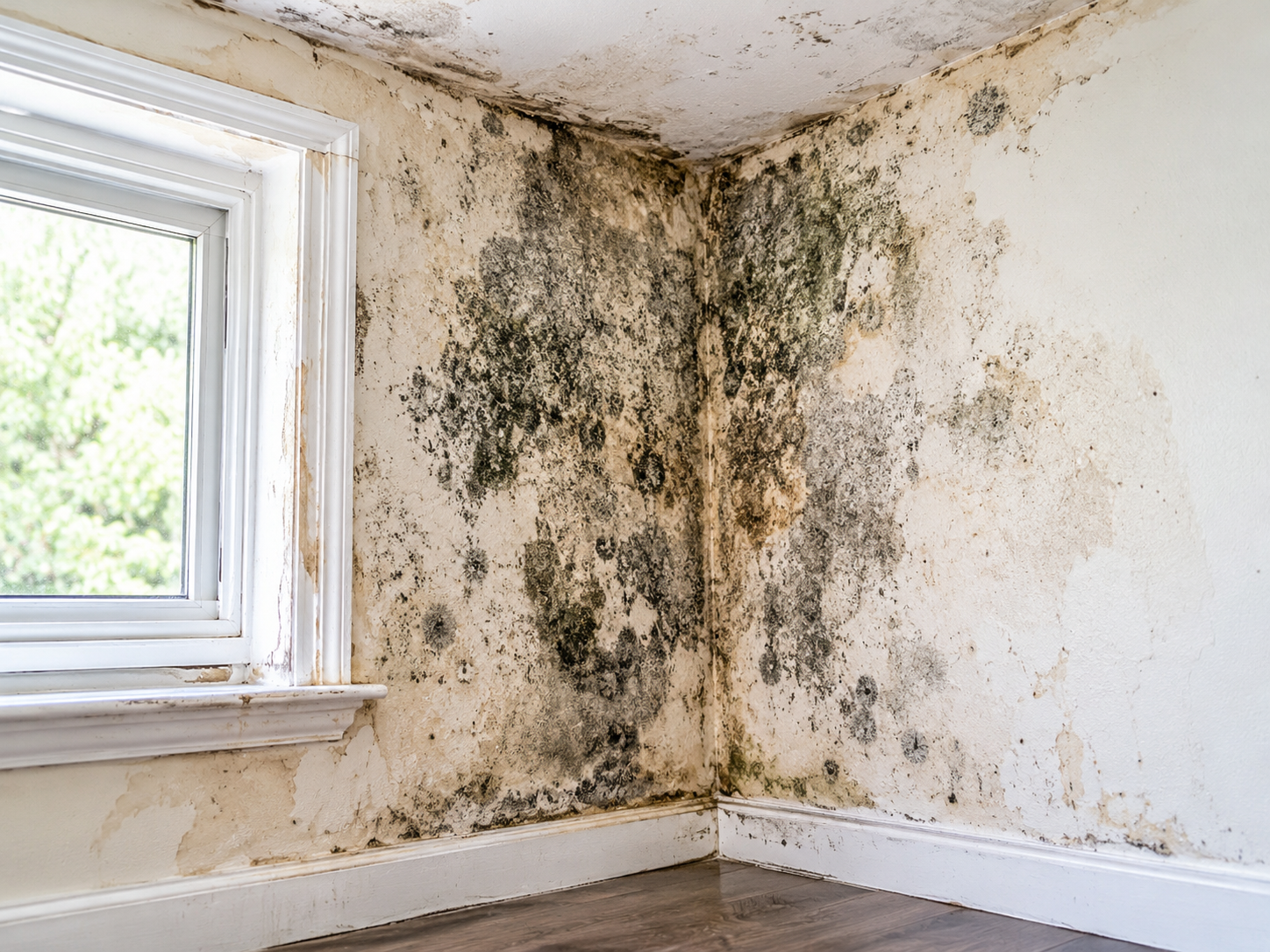
Mold comes back unless the moisture is fixed, so remediation always pairs removal with moisture control.
Mold returns unless the water source is fixed. We find the moisture, whether from leaks, condensation, or unresolved water damage, and document it.
Plastic barriers and negative air pressure keep spores from spreading to clean rooms during the work.
HEPA air scrubbers run throughout the project to capture airborne spores.
Mold-damaged porous materials such as drywall and insulation are removed and bagged. Salvageable framing is cleaned with HEPA vacuuming and abrasive methods.
Surfaces are treated after cleaning to slow regrowth.
We dry the area to a verified moisture level and support post-remediation verification by a separate licensed assessor where required.
Mold shows up in different parts of a building, and each location needs a different plan.
This is the best and cheapest mold service: treating and drying a wet structure before mold grows. It fits any owner who has had a leak or flood in the last few days. The differentiator is timing. We apply antimicrobial treatment, dry the building to verified levels, and monitor moisture, which stops the mold cycle before remediation is even needed.
When mold has already grown, we build sealed containment, run negative air machines, and remove contaminated materials in a controlled way. It is best for visible growth on drywall, insulation, and framing. The differentiator is spore control: proper containment keeps mold from spreading to clean rooms, which DIY scrubbing commonly does. Every barrier and air scrubber location is recorded so your assessor can review the setup.
Mold in air handlers and ducts can spread spores through the building every time the system runs. We coordinate cleaning with your HVAC contractor, control the affected areas, and track down moisture sources such as condensate drains. It is best for owners who see mold near vents or smell mustiness when the AC runs. The differentiator is treating the source, not just the surface.
Attics and crawl spaces trap humid Florida air and roof leaks, which grows mold on sheathing, joists, and insulation. We remove wet insulation, clean framing, and correct moisture sources. It is best for musty odors and older homes. The differentiator is finding the cause: poor ventilation, roof leaks, and bare ground or missing vapor barriers keep the cycle going. Vents and airflow are checked before we close everything up.
Mold is not always visible. These signs suggest moisture and possible growth behind walls or above ceilings.
These are often confused. Under Florida rules they are different jobs, and the assessment and the remediation are generally done by different professionals.
| Service | Who does it | Purpose | When you need it |
|---|---|---|---|
| Mold assessment | Independent Florida-licensed mold assessor | Find mold, test if needed, and write a remediation protocol | When mold is suspected but not visible, or you want an independent opinion |
| Mold remediation | Florida-licensed mold remediator | Remove mold-contaminated materials and fix moisture with containment | When mold growth is confirmed or visible |
| Post-remediation verification | Independent licensed assessor | Confirm the space is clean and dry after remediation | When your protocol, lender, or insurer requires clearance |
| DIY cleaning | Homeowner | Wipe very small, surface-level spots | Only for tiny non-porous spots, never for widespread growth |
We inspect the affected area, identify the moisture source, and document the extent of growth.
We seal the work area with plastic barriers and set negative air pressure.
HEPA air scrubbers run throughout the project to capture airborne spores.
Contaminated drywall, insulation, and other porous materials are removed and bagged, and framing is cleaned.
Surfaces are treated with antimicrobial products to slow regrowth.
We dry the area to verified moisture levels, then support post-remediation verification if required.
Mold remediation is priced by the size of the affected area, the materials involved, and the containment required. We provide a written estimate after inspection, and we tell you honestly whether drying and prevention alone will solve the problem.
| Project type | Estimated range | Typical scope |
|---|---|---|
| Small contained area | $500–$1,500 | Limited surface growth, HEPA cleaning, containment and antimicrobial treatment. |
| Bathroom or single-room remediation | $1,000–$6,000 | Containment, removal of affected materials, HEPA filtration and moisture-source correction. |
| Attic or crawl-space remediation | $1,000–$5,500 | Access, affected insulation or sheathing, containment, cleaning and moisture correction. |
| HVAC / duct-related mold | $3,000–$10,000 | Specialized HVAC or air-handler work, containment and coordination with HVAC professionals. |
| Large / multi-room project | $6,000–$20,000+ | Extensive containment, demolition, drying, reconstruction and independent clearance when required. |
Pricing reference: 2026 published cost guides report Jacksonville mold-remediation estimates ranging from roughly $1,400 to $11,500 overall, while other local guides show approximately $500–$20,000 depending on project scope. National 2026 data places typical professional remediation around $1,223–$3,757 and notes that location, containment and repairs materially affect cost.
These are published-market estimates, not Jacksonville Water Damage Solutions quotes. Current 2026 cost guides report broad Jacksonville ranges because scope, access, affected materials, containment, HVAC involvement and reconstruction can change the final price substantially. A site inspection is required for an accurate written estimate.
Most residential mold remediation takes 3 to 7 days, depending on the size of the area and whether drying is still needed. Larger commercial projects take longer. Independent clearance testing, if required, adds one to two days. Call (904) 467-6998 early, because prevention after water damage is always faster than remediation.
We remediate mold in homes and businesses across Duval County, from the Westside and Ortega to Mandarin, Southside, Arlington, San Marco, and the beaches.
This representative project demonstrates the page layout and scope of work. It is not presented as a verified customer case study.
A Jacksonville homeowner discovers visible mold on attic sheathing after a recurring roof leak. The remediation scope would begin by correcting or coordinating the moisture source, establishing containment, protecting unaffected areas, and using HEPA filtration during removal and cleaning. Damaged porous materials would be removed where necessary, affected framing would be cleaned, and the attic would be dried before the area is returned to service. If the project requires post-remediation verification, an independent licensed assessor can perform that verification.
Mold remediation should be honest and documented. We fix the moisture first, use proper containment, and support independent clearance so you know the job is done. Our office is at 3811 Blanding Blvd in Jacksonville, and our technicians hold the licenses and certifications shown here.
Mold can begin growing within 24 to 48 hours in warm, humid conditions. Fast extraction and professional drying are the best prevention.
Bleach does not solve the moisture problem and can leave roots in porous materials like drywall. For anything beyond a very small surface spot, professional remediation is safer.
Not always. Visible mold usually does not need testing. If you want testing or a written protocol, Florida rules generally call for an independent licensed assessor.
Coverage varies. Many Florida policies cover mold only when it results from a covered water loss, and some cap mold payments. Report quickly and keep documentation.
Fix leaks fast, dry water damage within 24 to 48 hours, keep indoor humidity below 60 percent (ideally 30 to 50 percent), run bathroom and kitchen exhaust fans, and service your AC condensate drain.
Mold can worsen allergies and asthma and can damage building materials. If you have health concerns, talk to your doctor and reduce exposure until the source is fixed.
Yes. We handle commercial mold projects with containment and after-hours scheduling to protect operations.
Tap to call our 24/7 emergency line, or request a free inspection and we will respond fast.
Jacksonville Water Damage Solutions